
Monday, 23 July 2012

Monday, 2 July 2012
Bright/Cultura
http://lazycatstyle.blogspot.com.au/2011/06/brightcultura.html
On
08:29

This is a blog made by guatemalan
girls who believe in global fashion and sense of style, without third
word bounderies, mixing the latest trends. Nevertheless, our style is
highly influenced by our roots, our culture and traditions.
This outfit is the mix of our
style concept committed with guatemalan folklore. The blouse is called
"guipil", made by hand by artisans, in the same way the hat band. We
styled the outfit with leather pants, vintage belt and wedges from a
local store.
One of my favorite parts of this
project is working with the amazing San Juan Comalapa´s people, lern
the way they think and live is a whole experience. This pictures are
located in the entry walls, full of painting and draws made by the local
artist, experts in Naiv art.
If you want more information about Guatemala, guatemalan textiles and San Juan Comalapa go to GUATEXTIL .


Maya Textiles in Quetzaltenango
Maya Textiles in Quetzaltenango

The
textiles woven by Maya descendants have long been appreciated for
their beauty and sophistication. Using just a simple back-strap loom, women in Guatemalan Highlands
create intricately brocaded blouses for themselves and clothing for
their families. The textiles they produce are both, attractive and
utilitarian.
But
while these textiles can be appreciated solely for their aesthetic
value, this is an inherently limited interpretation. Mayan textiles are
much more than pretty pieces of fabric. The clothing worn on a daily
basis communicates a lot of information about the wearer, including
his or her social status in the community, his or her ethnic group, and
the area in which he or she lives.
Hundreds of symbols have been identified in Mayan textiles. The weaver selects a combination of symbols, like those shown below, to portray a mythological drama, and that is why there are no two identical weavings. From the left, symbol 1: diamonds represent the universe and the path of the sun (the largest diamond in the center) in its daily movement, from east (small diamond at the top) to the west (small diamond at the bottom); symbol 2: scorpion tails representing the lightnings; symbol 3: the Earthlord, God of the underworld; 4: a toad representing the singings; 5: the vulture, representing the legend of the renaissance after the great flood that destroyed the previous world.
 When
interpreted in that order, the drama unfolds: while the toad sings at
the mouth of the Earthlord's mountain cave, the Earthlord's daughters
fluff cotton that will be transformed into rain clouds by a bolt of
lightning. The scorpion's spiny tail stings the lightning that attracts
the rain and produces the flowering fields.
When
interpreted in that order, the drama unfolds: while the toad sings at
the mouth of the Earthlord's mountain cave, the Earthlord's daughters
fluff cotton that will be transformed into rain clouds by a bolt of
lightning. The scorpion's spiny tail stings the lightning that attracts
the rain and produces the flowering fields.
Hundreds of symbols have been identified in Mayan textiles. The weaver selects a combination of symbols, like those shown below, to portray a mythological drama, and that is why there are no two identical weavings. From the left, symbol 1: diamonds represent the universe and the path of the sun (the largest diamond in the center) in its daily movement, from east (small diamond at the top) to the west (small diamond at the bottom); symbol 2: scorpion tails representing the lightnings; symbol 3: the Earthlord, God of the underworld; 4: a toad representing the singings; 5: the vulture, representing the legend of the renaissance after the great flood that destroyed the previous world.

 The
outfit to the left is typical of the clothing worn by women of
Quetzaltenango, where some women continue to wear traditional clothing.
The
outfit to the left is typical of the clothing worn by women of
Quetzaltenango, where some women continue to wear traditional clothing.
The
huipil or blouse, is constructed of three panels of cloth. Where
these panels are sewn together, the weaver embroidered multicolored
flowers. This design is also continued around the neck.
The
perraje or shawl, is woven of cotton and wool and serves multiple
purposes. It can be worn around the shoulders on a chilly day in the
highlands or folded and carried on top of the head until needed. In
some areas, it may be used to cushion a load carried on the head, or
it may be used as a carrying cloth to transport an infant or produce
from the fields.
The
corte or skirt, is made of cotton, and the fabric is typically woven
on treadle looms using the ikat technique. This skirt is made of two
lengths of cloth. The randa, or the area where the two pieces are sewn
together, is embroidered with pink, purple, yellow, and burgundy
embroidery. The darker area above the randa indicates that this skirt
was taken in to accommodate a shorter person and later let out, perhaps
as its owner grew taller.
http://ajourneythroughguatemala.blogspot.com.au/2010/05/maya-textiles-in-quetzaltenango.html
Monday, 18 June 2012
⪼⫶⨁⫶⪻ Ꮠ ᎯᎷ ᏟᏒᎾᏇ ⪼⫶⨁⫶⪻
⪼⫶⨁⫶⪻ Ꮠ ᎯᎷ ᏟᏒᎾᏇ ⪼⫶⨁⫶⪻
⨁
"I Am Crow"

⨁
"Coyote Rock"

⨁
"Walks Alone"

⨁
"Dream of the Bear"

⨁
"Shadow of the Bear"

⨁
"Bird of Prey"

⨁
"Blue Fire"

⨁
"Ceremony"

⨁
"Circle of Power"

⨁
"Distant Storm"

⨁
"Listens to Thunder"

⨁
"Medicine Dog"

⨁
"The Messenger"

⨁
"Natane" Daughter of the Ghost Dance

⨁
"Owns the Eagle

⨁
"Prophet"

⨁
"Sees Behind"

⨁
"Guardian of the Canyon"

⨁
"Homecoming"

⨁
"Shadow on the Sun"

⨁
"Standing I Fly"

⨁
"Two Stars"

⨁
"Hawk Bell"

⨁
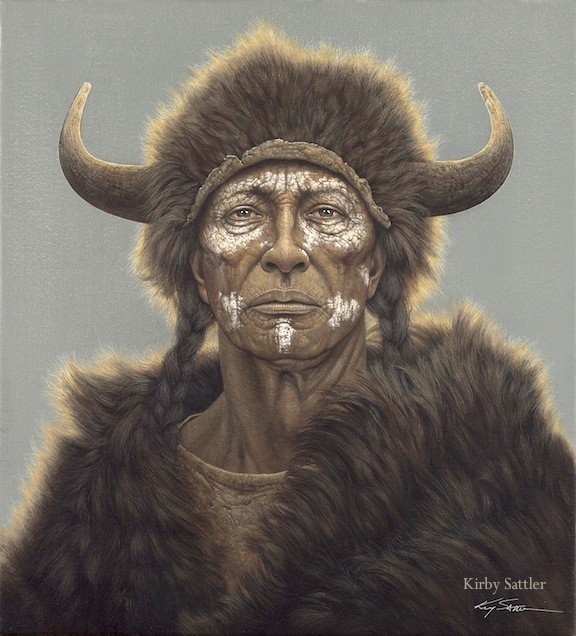
"Last Buffalo"
⨁
"Night Whispers"

⨁
"Red Path"

⨁
"Return of Red Earth"

⨁
"Silent Sky"

⨁
"Voice of Half Moon"

⨁
i have been
selfishly hording these images of Kirby Sattler's artwork for years. i
am mesmerised by the beauty, detail, and imagination he puts into each
piece. they evoke such a strong connection of Earth Medicine for me,
that i thought it was time to share.
a little about the artist:
The
work of Kirby Sattler is fueled by an inherent interest in the
Indigenous Peoples of the Earth. His current images evolve from the
history, ceremony, mythology, and spirituality of the Native American.
Sattler's ultra-detailed interpretations examine the inseparable
relationship between the Indian and his natural world, reflecting a
culture that had no hard line between the sacred and the mundane. Each
painting functions on the premise that all natural phenomena have souls
independent of their physical beings. Under such a belief, the wearing
of sacred objects were a source of spiritual power. Any object- a stone,
a plait of sweet grass, a part of an animal, the wing of a bird- could
contain the essence of the metaphysical qualities identified to the
objects and desired by the Native American. This acquisition of
"Medicine", or spiritual power, was central to the lives of the Indian.
It provided the conduit to the unseen forces of the universe which
predominated their lives.
visit his site here. where you can view more works and read more about the artist and his views.
http://earth-age.blogspot.com.au/2012/06/blog-post_12.html
Thursday, 14 June 2012
THE MIRACULOUS MUNDANE
Thursday, June 14, 2012
THE MIRACULOUS MUNDANE
Dive in and enjoy a sweet treat.



Lady Campbell Weed Lord Adelaide, 2011

Duncan Renovator, 2012

The Lure of Paris #29, 2011

Furthered, 2012

Rhodamine Mabel Bungaara, 2011
http://wovenbohemia.blogspot.com.au/2012/06/miraculous-mundane.html
Subscribe to:
Posts (Atom)